
After Freixe: Under Art. 717a OR, a Conflict Disclosure Only Counts If Minuted
Since 1 January 2023, Art. 717a OR has required the board of directors and executive management to disclose conflicts of interest immediately and in full. In a liability claim under Art. 754 OR, however, only documented disclosure counts — the Freixe case at Nestlé shows what undocumented silence costs.
Casimir von Firn, MLaw
Since 1 January 2023, conflicts of interest have had their own provision in the Code of Obligations. Art. 717a OR requires the board of directors and executive management to inform the board “immediately and in full of any conflicts of interest affecting them”; the board “shall take the measures necessary to safeguard the company’s interests.” What had previously been a soft expectation derived from the duty of loyalty (Art. 717(1) OR) is now an expressly codified obligation, clearly named in any liability proceeding. What undocumented disclosure costs has been on display at Nestlé since September 2025.
The substance is not new. The obligation to disclose conflicts and, where necessary, to recuse oneself had long been derived from the duty of loyalty by both scholars and practitioners; commentary writers read Art. 717a OR as no more than a codification of existing practice. What is new is the precision. Two adverbs carry the provision: “immediately” sets the deadline; “in full” forecloses partial disclosure. And it expressly binds executive management: a CEO’s conflict must go before the full board.
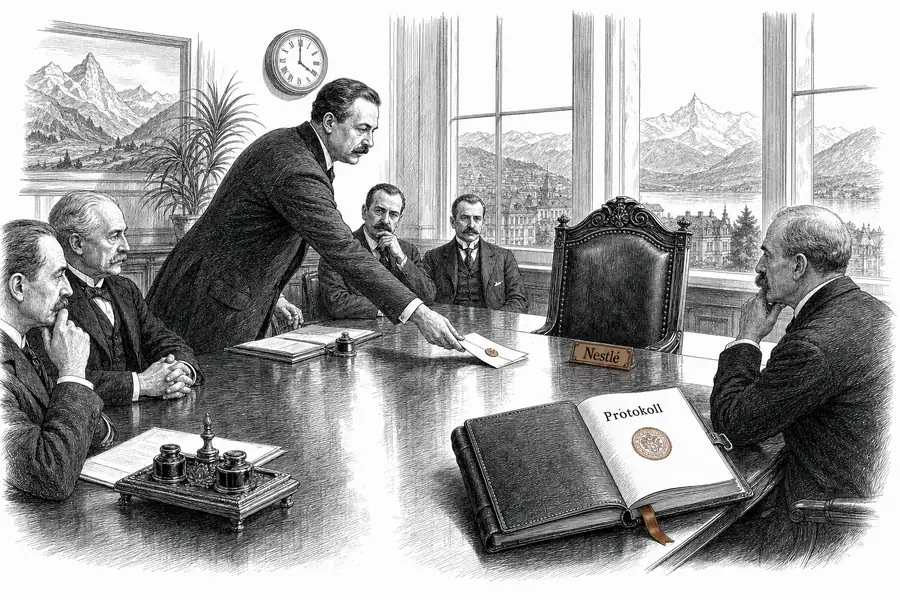
That precision bites in the minutes. Art. 717a OR does not, in terms, require documentation — but a disclosure only becomes proof once it and the resulting measure are recorded in the board minutes. Art. 754(2) OR ties exculpation to proof of due care: anyone who cannot prove the disclosure cannot prove they acted correctly. Without the minutes, the disclosure is unproven and the measure invisible. Documented disclosure is the only line of defence a court will accept without further argument.
At the Swiss-incorporated Nestlé S.A., the mechanism ran in reverse. The board dismissed CEO Laurent Freixe with immediate effect on 1 September 2025, after an investigation revealed an undisclosed relationship with a direct subordinate — a breach of the code of conduct. That situation — a relationship with an employee over whose promotion and compensation the CEO has operational say — compromises impartial judgment within the meaning of Art. 717a(1) OR; the failure to disclose was therefore a breach of the statute. The matter came to light not through self-disclosure under Art. 717a(1) OR but via a report through the “Speak Up” channel; Freixe initially denied the relationship, and a first investigation reached no finding. The measures under paragraph 2 were taken reactively by the board under Chair Paul Bulcke and Lead Independent Director Pablo Isla, with outside counsel. The price was steep: dismissal without severance, Bulcke’s early departure as board chair and Isla’s assumption of the role in autumn 2025, and sustained pressure from investors.
For in-house legal teams, the next step is concrete: add a standing agenda item for conflicts of interest to every board and management meeting, and record every disclosure together with the measure taken in the minutes. The content of the obligation is settled. What remains open is the standard: how short “immediately” is, and whether an unminuted disclosure counts in a dispute, are questions the Bundesgericht has not yet decided under Art. 717a OR. The answer will come with the first liability judgment under Art. 754 OR that rests on a delayed or omitted conflict disclosure.